FFR, RFR & Physiology-Guided Angioplasty
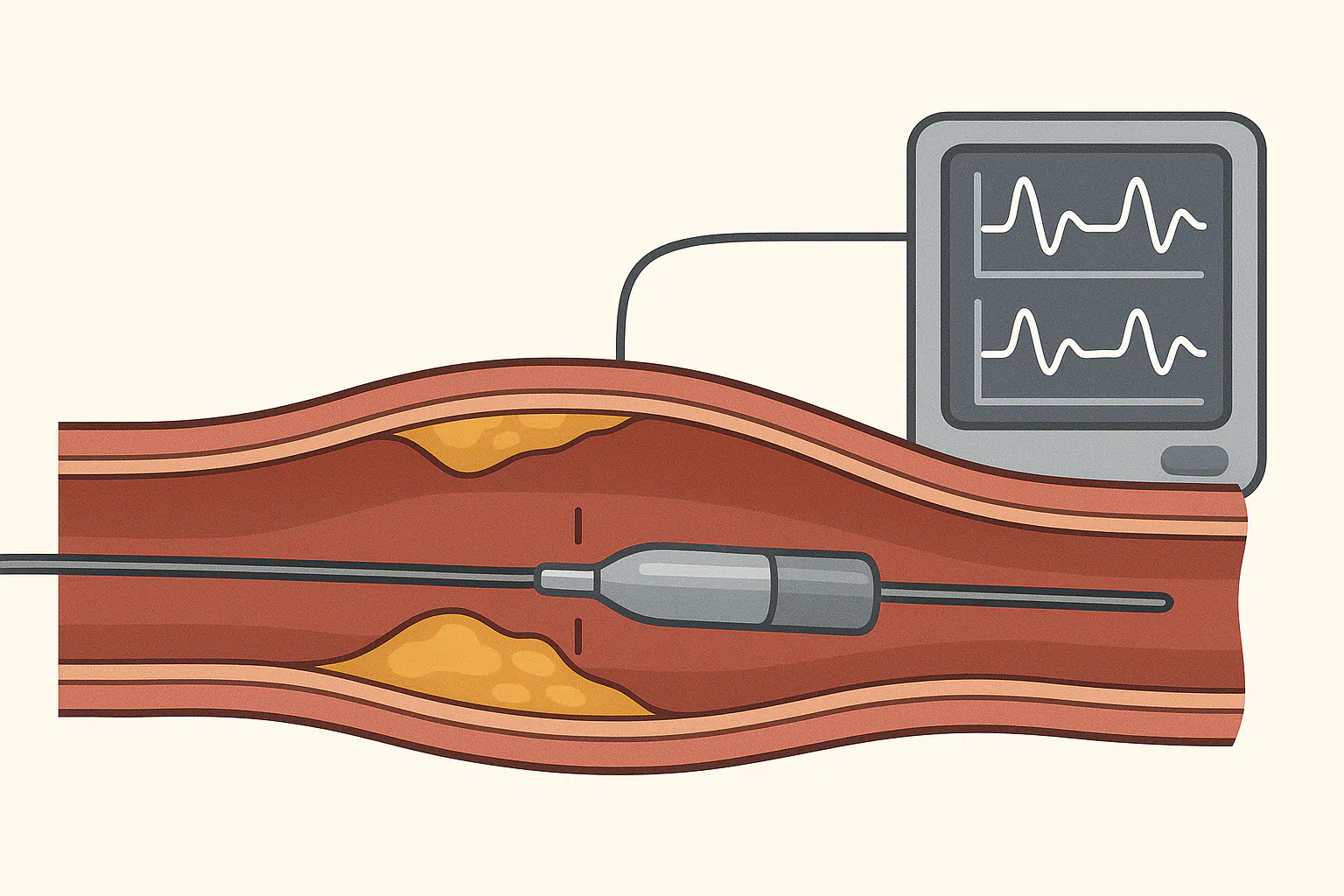
FFR (Fractional Flow Reserve) and RFR (Resting Full-cycle Ratio) are advanced diagnostic techniques used during coronary angiography to accurately assess the functional significance of heart artery blockages.
Unlike traditional angiograms that show the anatomy of coronary arteries, these physiological assessments measure how much a blockage actually affects blood flow to the heart muscle, helping cardiologists make precise, patient-specific treatment decisions.
Dr. Jaydutt B Tekani specializes in physiology-guided angioplasty, combining cutting-edge diagnostic tools like FFR and RFR to ensure that every intervention is truly necessary and delivers the best long-term results.
What Are FFR and RFR?
Fractional Flow Reserve (FFR)
FFR is a pressure-based measurement used to determine whether a coronary artery narrowing is significantly reducing blood flow to the heart muscle.
A thin, specialized pressure wire is passed through the coronary artery beyond the area of narrowing. A small amount of medication (usually adenosine) is given to maximize blood flow, and the pressure difference across the blockage is measured.
An FFR value of 0.80 or less typically indicates that the blockage is severe enough to require angioplasty or stenting.
Resting Full-cycle Ratio (RFR)
RFR is a newer, non-hyperaemic index, meaning it measures the pressure difference without the need for medications like adenosine.
It provides an accurate, quick, and patient-friendly assessment of coronary physiology during rest, making it a convenient alternative to FFR in many cases.
Together, FFR and RFR help cardiologists determine:
- Which blockages actually require stenting
- Which can be safely managed with medication alone
- The best strategy for personalized, evidence-based heart care
Why Physiology-Guided Angioplasty Is Recommended
Not all blockages seen on angiography cause reduced blood flow or chest pain (ischemia).
Performing angioplasty on such lesions offers no real benefit and may expose patients to unnecessary procedures.
FFR- and RFR-guided assessment ensures:
- Accurate identification of functionally significant lesions
- Avoidance of unnecessary stenting
- Better long-term outcomes and reduced complications
- Cost-effective treatment tailored to each patient’s condition
How the Procedure Works
Physiology-guided angioplasty is performed in the Cardiac Catheterization Laboratory (Cath Lab), often as part of a diagnostic coronary angiogram.
Step-by-Step Process
- After local anaesthesia, a thin catheter is inserted through the wrist or groin artery.
- A pressure-sensing wire is passed across the coronary blockage.
- For FFR, a vasodilator medication (like adenosine) may be given to measure pressure during maximum blood flow.
For RFR, measurements are taken at rest — no medication needed. - The pressure readings from both sides of the blockage are recorded and analyzed.
- Based on the results:
- If the blockage significantly restricts flow (low FFR/RFR), angioplasty and stent placement are performed immediately.
- If not, the artery is left untouched and managed medically.
The entire process usually adds only 5–10 minutes to the angiogram but provides critical information that guides the best treatment.
Interpreting the Results
- FFR ≤ 0.80 → Indicates significant flow limitation; angioplasty is beneficial
- FFR > 0.80 → Indicates mild or moderate narrowing; can be treated with medicines
- RFR ≤ 0.89 → Suggests physiologically significant narrowing
By using these precise cut-offs, cardiologists can make evidence-based decisions for each individual artery.
Benefits of Physiology-Guided Angioplasty
- Improves accuracy in deciding which arteries truly need stents
- Reduces unnecessary procedures and potential risks
- Improves long-term survival and symptom relief
- Enhances stent outcomes by ensuring only essential lesions are treated
- Shorter recovery time and better quality of life
Physiology-guided decision-making represents the gold standard in modern interventional cardiology.
Is It Safe?
Yes. FFR and RFR measurements are minimally invasive, performed using specialized guidewires during a routine angiogram.
Complications are extremely rare and may include:
- Temporary discomfort due to adenosine (in FFR)
- Minor bleeding or bruising at the catheter site
- Very rare risk of artery spasm or vessel injury
When performed by an experienced interventional cardiologist like Dr. Jaydutt B Tekani, the procedure is safe, swift, and yields highly valuable insights for treatment planning.
When to Consider FFR or RFR Assessment
Your cardiologist may recommend FFR/RFR assessment if:
- Angiogram shows intermediate blockages (50–70%)
- You experience chest pain despite normal angiogram results
- There are multiple blockages, and prioritization is needed
- You have undergone prior stenting and recurrent symptoms
- You need precise guidance before angioplasty or bypass surgery
Expert in Physiology-Guided Angioplasty – Dr. Jaydutt B Tekani
Dr. Jaydutt B.B Tekani is a skilled Interventional Cardiologist experienced in advanced coronary physiology and precision-guided interventions.
He adopts a “treat only what is necessary” philosophy, ensuring patients receive optimal care with minimal risk.
His expertise in FFR, RFR, and physiology-guided angioplasty enables accurate diagnosis, tailored treatment, and superior long-term outcomes.
Book Your Cardiac Evaluation
If you’ve been advised to undergo angiography or have symptoms of heart disease, such as chest pain, shortness of breath, or fatigue, consider a physiology-guided evaluation with Dr. Jaydutt B Tekani.
Get clarity, precision, and confidence in your heart treatment plan.
Schedule your appointment today and take the first step toward evidence-based, patient-centered cardiac care.

Expert heart care backed by over a decade of interventional excellence. Visit us anytime; we are open 24 hours a day, seven days a week.


© 2026 | Dr. Jaydutt B Tekani | All rights reserved | Digital Marketing by Remedo