Transoesophageal Echo (TEE)
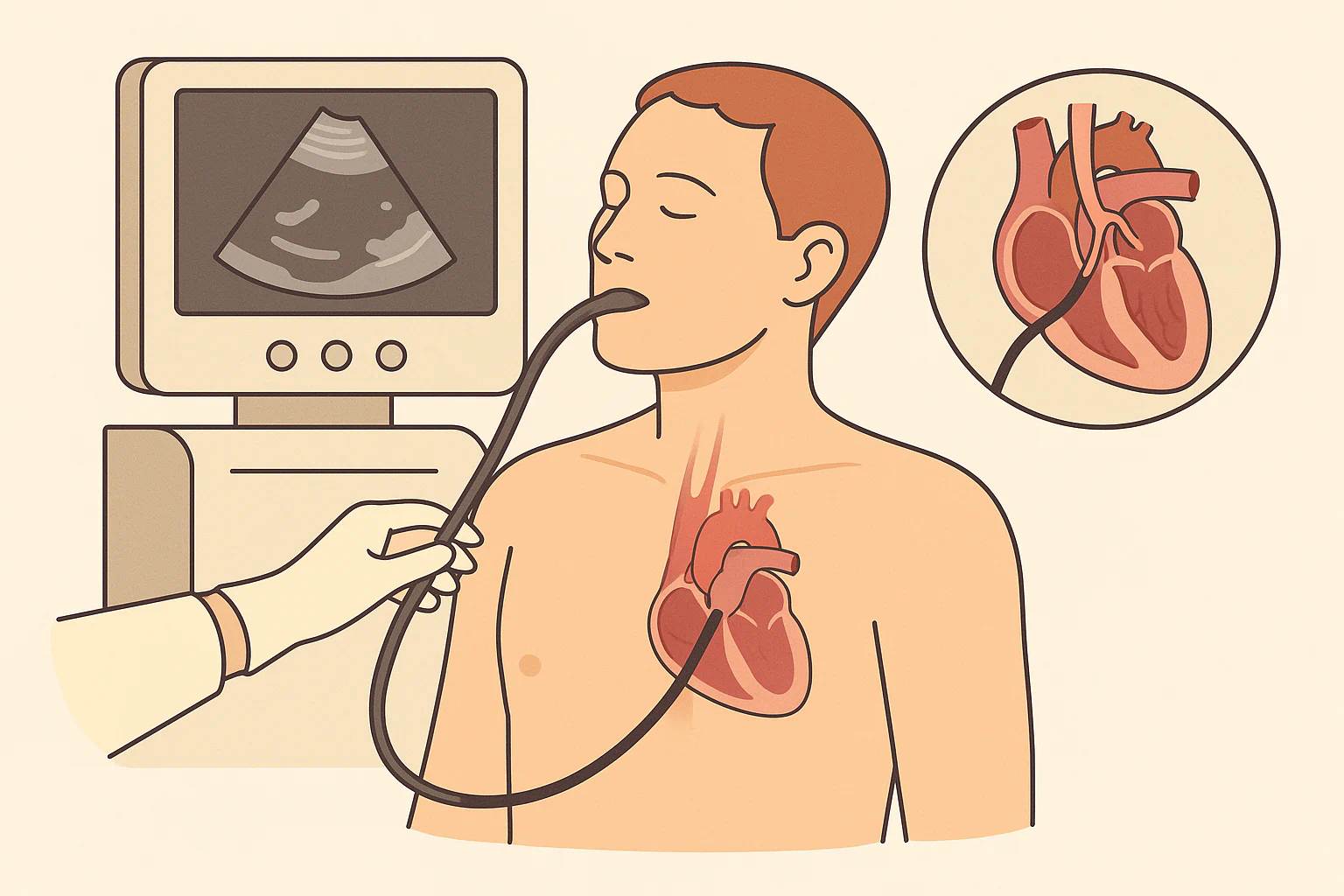
A Transesophageal Echocardiogram, or TEE, is a specialised imaging test that provides a detailed look at the heart’s structure and function. It helps your cardiologist evaluate how well your heart and valves are working and detect any abnormalities that may not be visible with a standard echocardiogram.
This test offers high-quality images that support accurate diagnosis and treatment planning for various heart conditions.
What Is a Transesophageal Echocardiogram (TEE)?
A Transesophageal Echocardiogram is an advanced type of ultrasound imaging that uses sound waves to create pictures of the heart. Unlike a standard transthoracic echocardiogram, where the probe is placed on the chest, TEE involves inserting a thin, flexible tube with a small ultrasound probe down the patient’s throat and into the oesophagus (food pipe).
Because the oesophagus lies directly behind the heart, this technique provides clearer and more detailed images of heart structures without interference from the ribs or lungs.
Why a TEE Is Recommended?
Your cardiologist may suggest a TEE when more precise information is needed than what a regular echocardiogram can provide.
Common Reasons for a TEE
- To check for blood clots, tumours, or infection inside the heart
- To evaluate heart valve function and detect valve disease or leakage
- To assess congenital (birth-related) heart defects
- To examine aortic aneurysms or dissections
- To monitor heart function during surgery
- To evaluate stroke or unexplained embolism (when a clot travels to the brain or other organs)
TEE is often used when doctors need high-resolution images to guide treatment decisions or plan surgery.
How the Procedure Works?
A Transesophageal Echocardiogram is a safe, well-tolerated procedure performed under the supervision of a cardiologist and trained medical team.
Before the Procedure
- Fasting: You will be asked not to eat or drink for about six hours before the test.
- Medication review: Inform your doctor about any medicines, allergies, or medical conditions. Some medications may need to be adjusted.
- Consent and preparation: The doctor will explain the process, and you will be asked to sign a consent form.
During the Procedure
- You will lie on your left side on an examination table.
- A nurse will place an intravenous (IV) line to administer sedation and help you relax.
- A local anaesthetic spray may be used to numb your throat.
- The cardiologist will gently guide the flexible probe through your mouth and into your oesophagus.
- Once the probe is in place, ultrasound images of your heart will be captured from different angles.
The procedure typically takes 30 to 45 minutes. You will not feel pain, though you might feel slight pressure or mild discomfort when the probe is inserted.
After the Procedure
- You will be monitored for a short time until the sedation wears off.
- You should not eat or drink for at least one hour after the procedure to allow your throat to recover.
- Your doctor will review the images and discuss the results with you.
- It is best to arrange for someone to drive you home after the test, as you may feel drowsy from sedation.
What the Test Shows?
A TEE provides your doctor with highly detailed images of your heart’s chambers, valves, and surrounding blood vessels. It helps identify:
- Abnormal blood flow through the heart
- Clots or infections (endocarditis) inside the chambers or valves
- Structural defects such as holes in the heart wall
- Aortic abnormalities like aneurysms or dissections
- Valve problems such as stenosis (narrowing) or regurgitation (leakage)
These findings allow your cardiologist to make accurate diagnoses and plan the most suitable treatment, whether it involves medication, monitoring, or surgical intervention.
Benefits of a Transesophageal Echocardiogram
A TEE is one of the most informative cardiac imaging techniques available. It offers several advantages over standard echocardiograms:
- Superior image clarity due to the probe’s proximity to the heart
- Better detection of small clots, infections, and valve issues
- Guidance during cardiac procedures, such as valve repairs or surgeries
- Minimal discomfort and quick recovery time
Is a TEE Safe?
TEE is considered a very safe procedure when performed by a trained specialist. Complications are rare, but as with any medical procedure, minor risks can occur.
Possible Risks (Rare)
- Sore throat or mild discomfort after the test
- Temporary hoarseness
- Very small chance of bleeding or injury to the throat or oesophagus
- Reaction to sedative medication
These side effects are usually mild and resolve on their own within a day or two. Your cardiologist will take every precaution to ensure your safety throughout the procedure.
How to Prepare for a TEE?
To make sure the test goes smoothly, follow these preparation tips:
- Do not eat or drink for at least six hours before the test.
- Inform your doctor if you have any swallowing problems or allergies.
- Discuss any medications, especially blood thinners, diabetes medicine, or heart drugs.
- Arrange for someone to accompany you and drive you home afterwards.
Following these steps helps your doctor obtain accurate results and ensures your comfort during and after the test.
When to Consult a Cardiologist
You may need a TEE if you experience symptoms such as:
- Unexplained chest pain or shortness of breath
- Irregular heartbeat or palpitations
- Swelling in the legs or ankles
- Dizziness or fainting spells
- History of stroke or blood clots
A cardiologist will evaluate your condition and determine if TEE is necessary to assess your heart in more detail.
Expert Cardiac Imaging with Dr Jaydutt B Tekani
Dr Jaydutt B Tekani is an experienced Cardiologist who specialises in advanced cardiac imaging and diagnostic procedures such as Transesophageal Echocardiograms. He ensures patient comfort, precision, and safety at every step of the process.
Whether you require a TEE for diagnosis, surgical planning, or ongoing cardiac management, you will receive comprehensive care and clear guidance throughout your treatment journey.
Book Your Consultation Today
If your doctor has recommended a Transesophageal Echocardiogram or you have heart-related symptoms that need evaluation, schedule your appointment with Dr Jaydutt B Tekani today.
Take control of your heart health with expert care and advanced diagnostic technology.

Expert heart care backed by over a decade of interventional excellence. Visit us anytime; we are open 24 hours a day, seven days a week.


© 2026 | Dr. Jaydutt B Tekani | All rights reserved | Digital Marketing by Remedo